Monday, April 6, 2009

Breaking out bikes, cat goes for ride too

The girls dug out their bikes from the recesses or our basement last week to ride around our muddy (with snow patches) backyard because they could not wait another day to get on their bikes.

The family cat, Dulce, could likely have done without the basket ride. But she was a good sport about celebrating the rites of passage with a spring riding adventure (i.e., a short trip up and down the driveway) in G.'s basket.


Oh, and in case you didn't know, taking pets on a bike ride is not an original thought for the Almeida girls. The first animal to be introduced to biking was one of our chickens a couple of years ago.

That was when L. was first learning to ride a bike and a minor tip over happened but L. and the chicken walked away with only a few ruffled feathers.


(This is one of my favorite videos for L.'s commentary. It's about her dad's bike riding skills. I was not around at the time - G. made the video - but it cracks me up every time I hear her voice inflection and sentiment.)

Wednesday, April 1, 2009

100 Hours of Astronomy event starts April 3

The 100 Hours of Astronomy event is a webcast that will feature 80 telescopes, both on and off planet, so everyone can learn about what astronomers around the world are doing.

Here's a description of the program from the 100 hours of Astronomy website:
    Find out what's happening at a research observatory in your country, or on the other side of the planet, and discover what astronomers are doing right now! Who is observing? What are they researching? What do they hope to discover?

    You'll see a snapshot of life at many different observatories where astronomers will present exclusive images and talk about their work. Some will be observing distant galaxies, searching for extrasolar planets around other stars or studying our own Solar System. Some will be studying the Universe in visible light, others in radio waves or other wavelengths. Some may be working at solar observatories or with telescopes out in space. All of them will have a different story to tell.

    Around the World in 80 Telescopes will run from 09:00 (GMT) on April 3 to 09:00 (GMT) April 4. We will begin with the observatories atop Mauna Kea in Hawaii, and move westwards, visiting Australia and New Zealand, Asia, Europe, Africa, Antarctica, and the Americas. We will finish on the west coast of the US. You can see the schedule here as well as information about the observatories participating.

The Penobscot Valley Star Gazers and Jordan Planetarium and Observatory at UMaine (Orono) have teamed up to celebrate this event with Stella-Baloo on April 4. The event will run from 1:00 - 5:00pm and 7:00-10:00pm in Orono.

The Southworth Planetarium at USM's campus in Portland is also celebrating with lots of scheduled events as well April 1-4. Get a full schedule here.

Just wanted to pass on this event info because it sounds like a really cool event for families interested in learning more about the night sky and astronomy.

Tuesday, March 31, 2009

Fun shoot at the gun club range

The girls' 4-H shooting sports club celebrated the end of their season with a friendly "fun shoot" at the range with an NRA youth team that they competed against during the Postal Leagues.


My girls were the youngest and least experienced shooters in attendance, which was clear when looking at the other shooters. The older, more experienced boys used shooting jackets, slings and wrist pads to help steady their gun.


 The shooting coaches, as well as Fino and I, have encouraged my girls to try the shooting jackets but both of them refuse. They claim the jackets are tight and feel awkward, which to their way of thinking outweighs the elbow and shoulder pad benefits. And they can't utilize a sling without the jacket (the sling attaches to to the jacket and gun to help the shooter steady the shot) so that's not something they use either. But the girls enjoy their time on the range and as I was chatting with one of the coaches he told me, "Kids have to learn how to just shoot so it doesn't matter if they use the jackets. There aren't any slings and jackets in the woods when they go out hunting." (And this is one of the reasons I like the 4-H shooting sports program, they encourage kids to be safe with a rifle and learn at their own pace. Competition is second to the kids enjoying their target shooting experience.) The girls have absolutely no plans to shoot any real life animals but the fun shoot did mix things up during the last round with some new targets.


These targets were quite a bit smaller than the usual bulls-eyes and according to L, "The little animals were even more tiny through the gun sights!"


Their usual targets are on much larger paper and the bulls-eyes provide a much larger target to take aim. Even though these animal targets presented an advanced shooting challenge for the girls, they gave them a whirl. Neither of them managed to hit any of the animals on their target but they didn't seem to mind.


When we downloaded the pictures at home later G. said, "See mom, I was saving the animals. Yeah, that's it! I missed every one on purpose." That's one way to spin the results of a challenging round of target shooting.

Monday, March 30, 2009

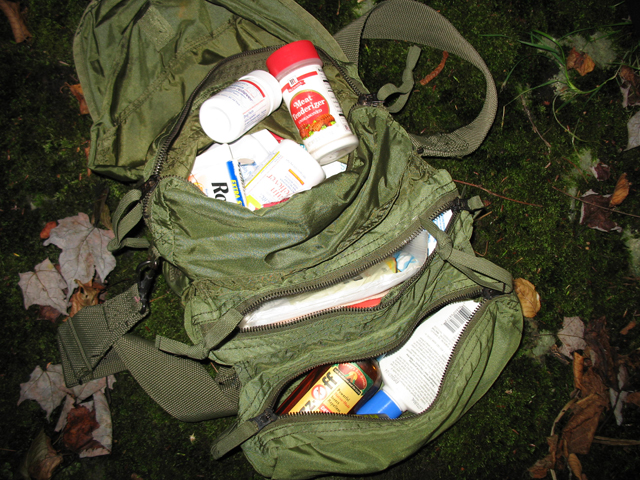
Kid Tracks Column: First aid kit covers all the bases

My family's first-aid kit has seen plenty of action over the years. The tweezers have regularly removed ticks and the baby wipes have saved us from poison ivy breakouts. The plastic card has earned a permanent place in our kit since we discovered its leech removal abilities, and we always carry small bottles of meat tenderizer and Benadryl after our run-in with yellow jackets a couple of years ago.

Our first-aid kit includes a couple of items we use all the time – that helps ensure that I use the kit regularly and know when it's time to replenish certain supplies. There is nothing more frustrating than thinking you have an item in your kit, only to discover at the time you really need it that you don't. I also try to make a point to sift through my family's first-aid kit between seasons to check expiration dates as well.

As the weather warms and your family gears up to hit the trails, it's a good time to take a few minutes to organize your first-aid kit. Here's an inventory of the Almeida family's kit (which we consider a constant work-in-progress to adjust to our needs and adventures) to get you started.


* Band-Aids: It was necessary to stock a variety of Disney character and tattoo Band-Aids when the girls were younger because that was the only way we could continue a hike after a minuscule scratch on a finger threatened to prevent us from moving another step. We still stock a variety of sizes and styles because even at 11 and 12, only the perfect Band-Aid will do.

* Hydrogen peroxide: A small bottle of this is a must as my girls refuse (quite vocally) any contact with "that bad nasty stinging alcohol square!"

* First-aid tape: There are 101 uses for tape on the trail beyond the medical need for it. Like when a backpack strap is driving one of the kids crazy and tape can stop the whining (not to tape a mouth closed, though I can admit to considering that a time or two, but to secure a stray strap to the pack).

* Anti-itch cream: In the summer it seems someone always has a mosquito bite. And although scratching a bite isn't a big deal, it can become an all-consuming irritant while hiking or biking (especially if the bite is hard to reach while wearing a backpack). A quick dab of anti-itch cream can cool down a bite and minimize the scratching.

* Baby wipes: This is another multi-purpose item that has been helpful after the misguided steps we've taken into poison ivy patches. By wiping our skin to remove the resins, we've been able to avoid the big rash outbreaks. Although soap and water really is best, the key is to get the resins off as quickly as possible so the wipes do the job in a pinch.


* Meat tenderizer: Making a paste of water and tenderizer helps reduce the swelling of bee stings. This was a tip we learned from a pharmacist and everyone in my family can attest to the fact that this odd-sounding remedy really does work after our run-in with yellow jackets a few years back (you can read about that unlucky break here). We were all stung multiple times and although it was strange to rub meat tenderizer over the stings on my breasts (I was carrying my younger daughter when the yellow jackets took advantage of my short-sleeves to fly in to my shirt and sting me over and over), the paste did cool down the stings.

* Gum: This always helps calm my girls down when they get anxious. And when bigger incidents happen (like the yellow jacket swarming), the chewing action keeps their mouths busy and cuts down on the amount of screaming while I am dealing with the situation.

* Tweezers: We use these primarily for tick removal but we've also found ourselves with splinters from branches on occasion so these are very handy to have.

* Eyewash solution: One time I walked into a branch and scraped my eye (I'd like to blame this on being tall but it really was related to my inattentiveness in watching where I was going). We used regular water from my water bottle to rinse my eye and it was darn cold (and not particularly effective in soothing the gritty feeling in my eye). Then my older daughter had a run-in with a rabbit at a friend's house and the cute little bunny used her face (mostly her eye) as a launching pad out of her arms. We rinsed her eyeball with eyewash solution and I realized how much more soothing it was. Now we carry a small bottle in our kit, which is primarily for me because I'm prone to walk into tree branches with more frequency than I care to admit.

* Moleskin: This stuff works a thousand times better than Band-Aids for blisters on your feet so it gets lots of use on our longer hikes (we pack a small pair of scissors as well to cut it).

* Ibuprofen and acetaminophen: We have a small bottle of each in both adult and children doses. On a particularly challenging hike when my muscles are sore, I will often take some ibuprofen and offer some to the kids right after a hike. This minimizes the complaining about aching muscles later that night.

* Plastic card: I discovered the benefit of an expired plastic credit card while trying to remove leeches off of my daughter's body last summer. The firm, but flexible, scraping of an old plastic card does the job well and I've found it's pretty good with newly attached ticks as well.

* Eyeglass mini screwdriver: If you have a child with glasses then you know that if they're going to have a problem with their glasses, it's going to be somewhere really inconvenient. This little item came in handy fixing our flashlight once on the trail too.

* Baby powder: This is great for sweating feet, chaffed thighs and for sand removal between toes. We go through a lot of powder every summer because dipping feet in whatever stream, river, lake we happen upon is a must to the girls' way of thinking.

* Sunblock and insect repellent: I keep these items in the first-aid kit because I use them frequently and this ensures I'm familiar with my kit's inventory.

THERE's MORE
Other items we also carry include:
* antibiotic cream
* alcohol swabs
* iodine
* Benadryl
* ace bandage
* feminine hygiene pads
* athlete's foot cream
* nail clippers
* emergency heater blanket
* whistle
* small sewing kit
* waterproof matches
* safety pins and paper clip
* hair elastics
* hand sanitizer
* flashlight

I'd like to say our kit is light and easy to carry in a backpack, but it's not. The girls have a smaller first aid kit for our shorter adventures when we're not far from our car (and our larger kit). But I think it's important to be prepared for an emergency (the real ones as well as the ones contrived by the little people in your life) when you're spending time outdoors.

I believe in the theory that if you're prepared for anything, you won't actually need any of it. That's worked well for us over the years. Oh, and trust me that the gum and preferred Band-Aid requests should be accommodated. That's a small price to pay for some solid insurance for a fun family adventure, too.

Originally published in Raising Maine Magazine, April 2009

Friday, March 27, 2009

Spring trip to ocean at Wells Reserve

Wednesday afternoon was a perfect 50 degree spring day in Maine and we dropped everything else in our schedule to enjoy it at Wells Reserve.

Our Flat Stanley, who is soon to be off on a new adventure (with the fairy girls), came along for the fun too.


We brought along some bubbles and the wind was just right to do all the work of sending the bubbles flying around the beach.


L. was being her spunky self by trying to aim the bubbles for my face (and camera) because she thought it was "hilarious!" There was much belly laughing about the bubbles and confirmed that it is still a much enjoyed activity for middle schoolers.


I think the video below sums up the different approach each of my girls takes to life. I love and appreciate both of their ways because they offer a balance and positive influence on each other. And I am grateful that G. has found ways to manage her feelings about the ocean beach (her toddler and preschool years are the reason I became well-versed in Sensory Integration issues and if you're facing the same issues you can see from this video how it translates to the middle school years).


L. wanted a partner to wade in to the waves with her so I joined her for a little bit (I also needed to make sure she didn't dive in to the fast moving current because I would not have put it past her). Well, I waded as much as my toes could handle before they turned various shades of red and blue.


L., who lasted in that water a lot longer than me, warmed up her feet and hands afterward with the sand. She even came up with a shoe style in the process - "Chuck" sand shoes.


The only incentive to leave the beach (even after a couple of hours) was the promise of a stop at The Maine Diner. The girls love that place and a trip to Wells Reserve doesn't feel "complete" to the girls without a pit stop for some chowder.

Thursday, March 26, 2009

Chocolate fudge recipe with tasty results

G. has been cooking up a storm the last few months. She was stuck on desserts (cakes, brownies and other sweets galore) before I encouraged her to do a bit more cooking and a little less baking.

I have no willpower when warm cake with dripping homemade frosting is on the counter. Or those chewy brownies with M&Ms she makes that offer the perfect chocolate fix. Oh and then there are the melt-in-your mouth muffins for breakfast (lunch and dinner).

It has all been too much for me to resist so I had to move her on to something else.

Now she's developing a repertoire of pasta dishes, oven omelets and pot roast in the slow cooker. I'm thankful for her interest in feeding the family more nutritiously (and I am very appreciative since she is saving me tons of time by preparing dinner!)

But G. picked up a fudge recipe from a 4-H workshop (part of that Mini-Forum 4-H conference that has provided so much after-event entertainment for L. lately with duct tape and fairy flowers) that is really tasty.


G. made fudge this morning and she suggested I share the recipe with the moms on Raising Maine (which was likely also a suggestion that she get some time in the spotlight on Kid Tracks like her sister has lately).

So to honor that request, here is the Chocolate Fudge recipe that is super easy and has good results (G. is 12 and makes this on her own without any adult supervision).

CHOCOLATE FUDGE
Melt in saucepan:

6 Tablespoons butter
4 Tablespoons milk

Add to melted mixture all at once:
1 teaspoon vanilla
1/2 cup powdered cocoa
1, 1 pound box/bag confectioners sugar

Stir until well blended.
Spread in buttered 8x8 pan. Let cool. Cut in to squares.

 
Recipe provided by Cumberland County's Extension Office, 4-H Mini-Forum's Fudge Making workshop

Wednesday, March 25, 2009

Learn about map confluences with GPS unit

When I bought my GPS unit several years ago the girls and I read the manual (well, most of it) to learn how to use it because we all wanted to find hidden treasure (geocaching and later to find Earth Caches and create GPS drawings). These fun games offered plenty of incentive to get things figured out.

But what was missing in my girls' education about the GPS unit was what the coordinates it displayed on its screen actually meant when they were translated to a printed map. A while back I made a map matching game and played it with a group of 4-Hers. We all had a lot of fun and learned quite a bit in the process (see below to take our Test Your Map Knowledge Quiz).

Part of the matching game included the term "confluence." That’s an exact spot where an integer degree of latitude and an integer degree of longitude meet, such as 43°00'00"N 71°00'00"W. Put another way, imaginary lines of latitude and longitude intersect each other, forming a grid that covers the Earth and helps us locate points on it. These imaginary lines are called confluences.

It’s a big (and key) mapping concept so I did of bit of research and found the Confluence Project website to help me explain this in terms of real life application to the kids.


This site posts trip reports of people documenting, through photos and their GPS units, confluences all over the world (and not all are on land - there’s water and ice cap confluences too). It’s a cool site (well maybe you sort of have to be a tech geek like me to appreciate it) and helped the girls understand what a confluence actually was and how we use these coordinates to pinpoint locations on a map (the Maine Gazetteer is also helpful since it displays confluences - and if you look really close at the 4-point or less type, you'll see coordinates on those lines as well).

After sifting through the confluences in Maine and New Hampshire on confluence.org (there are 64,442 possible confluences on the globe this site recognizes as do-able trip reports) we chose one that wasn‘t too far away and appeared easy to find. Well, it looked easy enough since it appeared to be off Route 302 just over the Maine border in Conway, NH.

It turned out that the 44° N 71° W confluence was in a swampy area in back of a private home. We did our best to get as close to the confluence as we could but we were .006 seconds off with our final reading.

But we learned (or in some cases, re-learned) some things:
    * Important map references can be in the most ordinary of places, like your own backyard.

    * GPS units have a margin of error of 8-10 feet in most cases (newer models might be a little more accurate because the technology has improved tremendously in the past few years. My first GPS unit, about 5 years old now, had a margin of error of 30 feet.)

    * The earth is always in motion so if you stop for more than a couple of seconds, your GPS unit coordinates will jump around. You may have been exactly where you were supposed to be but getting the GPS evidence of that can be tricky.

    * Tree cover affects GPS units and how efficiently they can connect to satellites, which can affect your margin of error.

    * Just because your GPS unit points you in a particular direction does not mean you throw common sense out the window and follow it (i.e., we weren’t going to trespass and/or walk through the mucky swamp any more than we had to - we learned this lesson a few years ago in Brunswick).

    * Sometimes the effort of finding a place is more about the journey than the actual location. In the case of recording this confluence, Fino stepped through the snow and into the swamp. He was covered in mud up to both knees and that will be what is remembered by our family on this short adventure rather than finding the confluence.


Test Your Map Knowledge Quiz

1. The line of 0° longitude is called this.

2. Longitude lines give directions ____ and ____of the prime meridian.

3. The line of 0° latitude is called this.

4. Latitude lines give directions ____ and ____ of the equator.

5. There is another name for latitude lines. What is it?

6. What do we call the imaginary lines of latitude and longitude that intersect, forming a grid that covers the Earth and helps us locate points on it?

7. True or False: The Earth is a perfect sphere.

8. True or False: Each degree of latitude is divided into 60 min. and each min. into 60 seconds.

9. When you mark a point of latitude and longitude, what is that called?

10. Degrees of latitude and longitude are divided into 60 minutes. What is the symbol used to identify this?
(a) " (b) '

11. Degrees of latitude and longitude are divided into 60 min. and then those min. are divided into 60 seconds. What is the symbol used to describe seconds?
(a) " (b) '

12. If you set up your GPS unit to record and report decimal longitude and latitude, you would see which coordinates.
(a) N 43.917611, W -70.317695 (b) N 43° 55' 3.3996" W -70° 19' 3.702"

13. If you set up your GPS unit to record degrees, minutes & seconds longitude & latitude, you would see these coordinates.
(a) N 43.917611, W -70.317695 (b) N 43° 55' 3.3996" W -70° 19' 3.702"

(Questions 10-13 are important to understand when you own a GPS unit because these are setting options. And let me confirm that unless you are a geometry math whiz do not try to convert degrees, minutes and seconds to decimal degrees without a calculator. It’s not an easy computation. Geocachers use the degrees, minutes and seconds setting but Google maps defaults (at least in my experience) to decimal degrees so it‘s important when using a GPS unit to recognize that not all coordinate markings are listed in the same way. These two different coordinate settings in no way translates to the same location without the complicated geometry computation.)

ANSWERS to quiz are below photos


The swampy area was more easily managed at this time of year than it would have been if we ventured here in the summer. But Fino took a bad step and ended up to his knees in mud.


 So close yet not quite for the true confluence.


Our closest reading caught on the camera of the confluence. Off by .006 isn't too shabby.


QUIZ ANSWERS: 1. Prime Meridian, 2. East and West, 3. Equator, 4. North and South, 5. Parallels, 6. Confluences, 7. False, 8. True, 9. A coordinate, 10. B, 11. A, 12. A, 13. B